Cataloguing the Uncatalogued
How libraries handle objects that resist every standard
There is a small, photocopied rectangle sitting in a box somewhere in a library, and nobody can quite agree what to call it. It has no ISBN. The title on the cover differs from the title on the inside. The year is absent. The author is a symbol rather than a name. It is eight pages, if you count the cover, six if you don't, and it arrived without a colophon. By every standard a cataloguer is trained to apply, it is not cooperating.
Zines have been landing in library collections for decades, and the cataloguing problem has never been fully solved — only negotiated, issue by issue, collection by collection. That negotiation is, in its own way, a mirror of the thing itself: self-published, rule-resistant, asking institutions to bend rather than bending to them.
Why the standards break down
The machinery of library cataloguing was built around commercial publishing. ISBN: assigned by a publisher to a single edition. ISSN: assigned to a serial with a stable title. MARC records: structured around fields — title, author, place of publication, publisher, date — that assume a professional supply chain produced the object. Zines often supply none of these cleanly.
The title field alone is a recurring difficulty. A zine might have a cover title, a running header that differs, a colophon that names it differently again, and a distro listing that abbreviates all three. Standard practice says to transcribe the title as it appears on the title page — but many zines have no title page. The cover becomes the default, and the cover might be hand-lettered in a style that resists exact transcription. Cataloguers note the variant title in a separate field and move on, but the choice of which is "main" involves editorial judgment that the record is not designed to carry.
Creator name presents similar trouble. Zines are frequently signed with pseudonyms, with first names only, with initials, with symbols, or not at all. An anonymous work is cataloguable — there is a convention for that — but a pseudonymous creator who has published across many zines under the same invented name poses an authority-file question: does that name get an authority record? What if the creator has never publicly connected the pseudonym to a legal name? The Zine Librarians unconference (zine librarianship has, improbably, had its own gathering since the early 2000s) has returned to this problem repeatedly. The broad consensus is that pseudonyms should be respected as given, that cross-references should be made where the maker has publicly acknowledged both names, and that speculation should be avoided entirely.
Date of publication, perhaps the most basic bibliographic datum of all, is absent from a surprising proportion of zines. "Undated" is a valid MARC value, but a collection of two hundred undated items is not especially useful to a researcher trying to understand a scene chronologically. Some cataloguers record approximate dates derived from internal evidence — a reference to an event, a price in a specific currency denomination — and flag the estimate with a question mark. Others prefer to note provenance: when and from whom the library acquired it. That datum, at least, is under the institution's control.
What systems libraries have developed
How libraries handle objects that resist every standard.
Collecting & Archiving
Faced with these gaps, libraries holding significant zine collections have developed local solutions, and those local solutions have gradually been shared and compared until something like a community practice has emerged — though not, it should be said, a single standard.
Many institutions use a simplified MARC record that prioritises what is actually present over what convention expects. Title from cover: transcribed as closely as possible. Creator: as given, with a note on the form used. Date: estimated, or the acquisition date. Format: often the most consistent field — a half-letter saddle-stitched zine can be described precisely as an object even when its provenance is opaque. Physical description matters here more than it does for a trade paperback; the number of pages, the format, the binding method and the printing technique (photocopied, risograph, mimeograph, hand-stamped) are often the most stable facts the object offers.
Subject headings are a deeper difficulty. The Library of Congress Subject Headings vocabulary was not built with zine content in mind, and the gap shows. A perzine about grief and chronic illness might technically warrant headings for "Grief" and "Chronically ill persons — Biography", but those headings will not tell a researcher that the item is first-person, informal, self-published, small-run — that it is, in short, a zine and not a memoir by a major press. Some collections have added local subject headings; others use a genre/form term, "Zines", which LC added to its genre/form vocabulary in 2014. That addition was a significant moment: it gave cataloguers a legitimate, controlled-vocabulary term to attach to these records and made cross-collection discovery substantially easier.
The question of series treatment — whether issues of an ongoing title are catalogued individually or as a serial — is one many collections still handle inconsistently. A zine that runs to thirty issues is arguably a serial; cataloguing it as one record with a holdings statement is efficient. But many zine "series" are irregular, change their name slightly between issues, go on hiatus for years and return altered, or produce one-off specials that diverge from the run. Treating every issue as a separate item, each with its own record, is labour-intensive but captures the individual character of zine production. Treating the run as a serial loses granularity. Most collections make the decision pragmatically, run by run, which means two libraries holding the same title may structure their records entirely differently.
The physical object as evidence
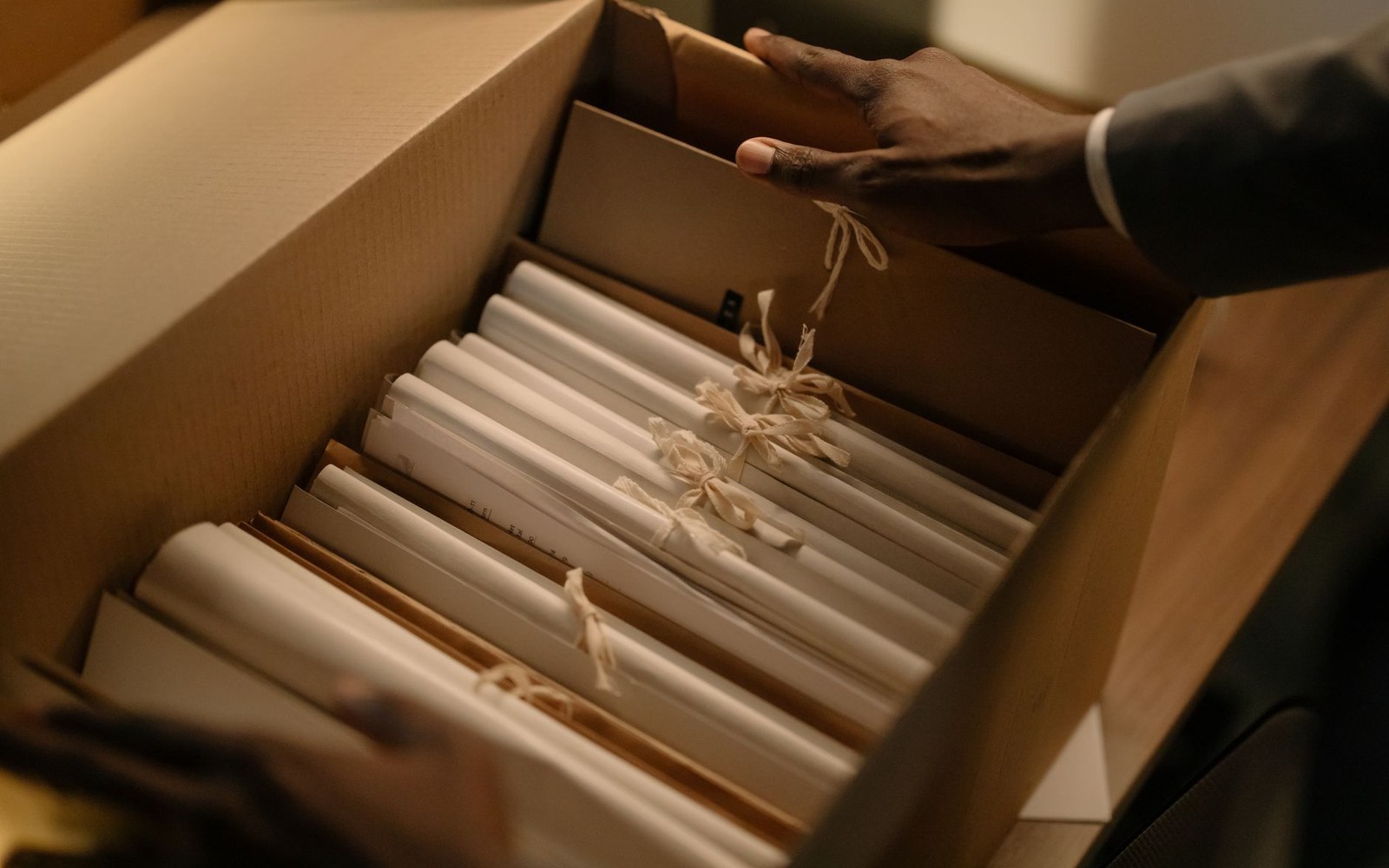
Because bibliographic data is so often absent or unreliable, the physical object carries more evidential weight in a zine collection than it does almost anywhere else in a library. A cataloguer's note on paper stock, ink colour, visible stencil grain, hand-stamped text, or the number of staples in the spine is not padding — it is, potentially, the most specific description of the item that exists. The colophon, where present, is the most authoritative source of information in the entire object: it may give a print run, a printing method, a year, a location, and a statement of terms. Cataloguers are advised to transcribe it fully.
Provenance — who donated or sold the collection, when, from which scene or geography — attaches context that the item itself may not carry. A set of zines acquired from a specific distro in a specific city in a specific decade can be understood differently from the same titles acquired individually through a swap pile at a fair. Some cataloguers record this at the item level; others at the collection level, in a finding aid that sits alongside the formal records. The finding aid model, borrowed from archival practice, is increasingly common for large zine donations: it describes the collection as a whole, its scope, its gaps, and the circumstances of its creation, and then lets the item-level records fill in the detail.
Discovery and access
A record that exists but cannot be found is, for practical purposes, the same as no record. Zine collections face a particular discovery problem: their records may be in a library's main catalogue, in a special-format catalogue, in a standalone database, or accessible only to someone who knows to ask at a particular desk. Efforts to aggregate zine catalogue records across institutions have been made — the most sustained being various attempts to build union catalogues specifically for zines — with partial success. The difficulty is that local cataloguing practice varies enough that records from different institutions describe equivalent items in non-equivalent terms, and merging them without editorial work creates noise rather than signal.
Open access has helped. Some institutions make their zine catalogue records freely available and machine-readable, which allows aggregators to index them. Social cataloguing platforms have also played a role: communities of readers describing their personal collections using informal, agreed-upon tags create a kind of distributed index that formal cataloguing has not managed alone. Neither approach is sufficient by itself; together, they improve the odds that a specific photocopied rectangle in a specific box gets found by the person who needs it.
Why it is worth the trouble
Libraries that have done this work consistently make a version of the same argument: that the objects commercial publishing ignores are precisely the objects most at risk of disappearing, and that the difficulty of cataloguing them is not a reason to hold back but a reason to develop the skills. The gaps in a MARC record for a zine are not failures of the record — they are accurate descriptions of an object that was made outside the systems those fields assume. Working around those gaps without filling them with invented data is the honest practice, and it makes the collection genuinely useful.
What sits in that box resists every standard because it was made to resist, or at least without any thought for standards at all. The cataloguer's job, in the end, is not to make the object fit the system but to make the system, field by field, stretch far enough to hold it.