What Actually Counts as a Zine
When the definition is the whole argument
A zine is self-published, produced in small runs, and distributed outside commercial channels — and that three-part description is more or less where consensus ends. Ask a dozen people who make them and you will get a dozen refinements, exclusions and caveats. That's not a weakness in the form; it's a feature. The looseness is part of what makes zines worth paying attention to.
Still, the question matters in practice. Librarians need to know whether an object belongs in a collection. Distros need to know what they'll carry. First-time makers need to know whether what they just stapled together qualifies. So it helps to look at the definition closely — to pull it apart, see what it actually requires, and then sit honestly with the edges.
The three conditions, examined one by one
Self-published means the maker controls the work end to end — writing, editing, designing, deciding when it's done. There is no commissioning editor, no art director, no publisher with approval rights over the final product. That's not arrogance; it's the structural condition that makes a zine a zine. A magazine filters work through an editorial layer before it reaches an audience. A zine does not. The thing you make is the thing that ships.
This is why "self-published" is not just a distribution description but an editorial one. The maker is the only gatekeeper. That single fact explains the form's particular texture — the rawness, the digression, the willingness to include something unpolished because the maker decided it belonged. Nobody said no.
Small run is the condition people argue about most, because it has no agreed number. Historically, zines were produced on photocopiers or mimeograph machines, and the run size was constrained by cost, by time at the machine, and by the number of people you could realistically reach. Fifty copies was common; a few hundred was ambitious; a few thousand was exceptional and usually a sign that something had grown past its zine origins. The spirit of small run is less about a specific ceiling and more about what the number implies: the maker can know, or at least imagine, who is reading it. There is no anonymous mass audience. The relationship between maker and reader is close enough to be personal.
Outside commercial distribution is the condition that separates a zine from a small press book or a limited-edition chapbook, and from nearly everything sold through a conventional publisher. Zines traditionally move through distros, at tabling events, by mail order, through trades between makers, and through shops that take stock on consignment. They are not returns-eligible, not bar-coded for a wholesaler's catalogue, not stocked by chains. That informal circulation isn't a defect — it's definitional.
The edges: where things get complicated
Self-published, small run, no gatekeeper — and the edges of that.
What a Zine Is
Take those three conditions seriously and you will still find objects that sit right on the line, or that fall confidently on the zine side by one measure and the non-zine side by another.
Anthologies and split zines raise the self-publishing question immediately. A split is a zine shared between two makers — typically printed back-to-back, each half belonging to one contributor. Is it self-published? Both makers controlled their own section, and neither had editorial power over the other's. Most people working in the form treat a split as straightforwardly a zine. An anthology is more complicated: it has a compiler who has made decisions about what to include. That editorial function starts to look a little like the role a publisher plays. In practice, the line usually comes down to scale and intent. A hand-assembled anthology produced by one person collecting work from friends, printed on a home printer and distributed at a fair, sits within the zine world regardless of what theory says. A slick perfect-bound anthology distributed nationally through a wholesaler has probably left it.
The run-size question gets pointed when a zine becomes unexpectedly popular and reprints repeatedly. A publication that started as seventy photocopied copies and eventually ran to several thousand isn't necessarily no longer a zine — but it is worth noticing that something has shifted. The intimacy of small-run production changes when a print-on-demand service can generate copies indefinitely at no upfront cost. There are genuinely useful and interesting publications produced this way that would call themselves zines and be received as zines. But the constraint that historically defined the form — the physical and financial ceiling on how many could exist — has been removed, and that affects the relationship between maker and reader in ways that aren't trivial.
Digital zines (sometimes called e-zines or, more recently, just digital zines) reproduce the form's visual and structural conventions in a PDF or a digital flipbook. They are self-published, they are usually small in reach if not in run, and many of their makers are fully embedded in zine culture. The argument against treating them as zines proper is that the physicality — the particular paper, the fold, the staple, the smear of risograph ink — is not incidental to the form. It is the form. A zine is a printed object. The argument in favour is that the communities, the ethos, and the DIY distribution networks are continuous with those of physical zines, and gatekeeping on materiality is its own kind of snobbery. Both arguments have merit. Most working definitions land somewhere pragmatic: digital zines are zines in spirit and community, but they are a different kind of object, and conflating them with physical print loses something real.
Professionally printed zines pose a different challenge. A zine printed by a commercial offset printer or a risograph studio, rather than on a home photocopier, is still self-published if the maker retained editorial control. The print method doesn't determine the category. What matters is who decided what went in it, not which machine put toner on paper. In fact, a risograph-printed zine is in many ways the contemporary norm in urban zine communities — made using a stencil duplicator that prints one spot colour per drum, produced at small-press print shops that function specifically to serve self-publishing makers. The format remains what it was: personal, unfiltered, editorially unmediated.
The institutional edge is one librarians know well. When a library or archive produces a small-run publication about their own collection — a newsletter, a pamphlet, a guide — it is not a zine in the relevant sense, even if it is photocopied and stapled. The editorial decision-making sits inside an institution, not with a self-publishing individual. This matters for collection policy: the question isn't whether something looks like a zine but whether it comes from the kind of autonomous self-publishing that zines represent.
What actually does the work in the definition
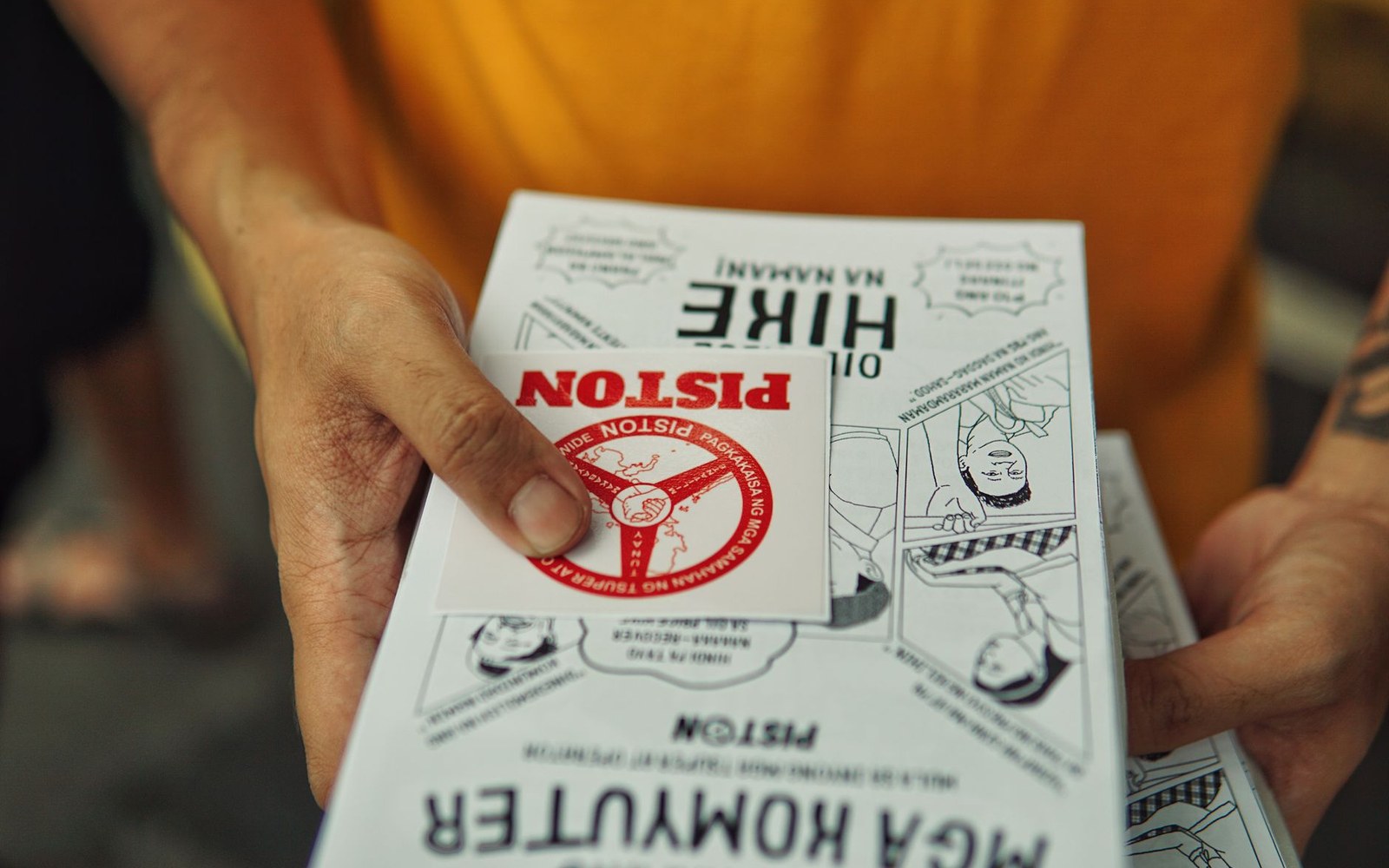
Strip the three conditions back and the real question is always: who decided? Self-publishing means the maker decided, without institutional approval, that the work was finished and ready to go into the world. Small run means the maker decided knowing that the audience would be limited, intimate and largely chosen — not anonymous and algorithmically assembled. Outside commercial distribution means the maker decided to operate in a network built on trade, trust and direct exchange rather than retail logistics.
None of these require poverty, or roughness, or a specific technology. A beautifully designed, risograph-printed, perfect-bound publication produced by a single maker in a run of two hundred copies is a zine. A photocopied, hand-stapled personal diary that no one else would have approved for publication is also a zine — probably more paradigmatically so. The perzine — a zine written as first-person autobiography, entirely unmediated — sits right at the heart of the definition. Everything else is a degree of proximity to that centre.
The colophon is often where the answer lives. That small block of text, usually tucked on an inside back cover or the last page, states who made the zine, how it was produced, and how many copies were printed. When a colophon says "made by one person, in a run of 150, printed at home," the question of whether this is a zine answers itself. When there is no colophon — when the thing in your hands has no stated maker, no declared run, no indication of its own origins — you are looking at something that either isn't a zine or isn't yet finished.
In the end, the definition is a tool, not a tribunal. The point is not to exclude objects that don't meet a precise specification. The point is to understand what the zine form is reaching for — autonomy, intimacy, directness — and to notice when something is genuinely doing that and when it only resembles it from a distance.