Saddle Stitch and the Long-Arm Stapler
The binding method that built the form
Saddle stitching — driving one or two staples through the fold of a spine — is so ordinary that it barely gets named. Pick up any stapled booklet, any photocopied zine, any church bulletin or school newsletter, and you are holding it. The method predates desktop publishing by decades and costs almost nothing to execute. For that reason, it has become the default binding of small-press print, the technique most makers learn first and rarely feel compelled to abandon.
The logic is simple. A zine assembled from folded sheets — typically half-letter pages nested inside one another — already presents its spine as a natural target. Fold your pages together, jog the edges square, open the bundle to the centre and staple through the fold from the outside. Two staples placed roughly a third of the way in from each end hold the whole thing. The pages can't migrate independently; the cover and interior move as one object. Done well, the result is a clean, flat, durable little book that survives being shoved into a bag, traded at a fair or mailed in a plain envelope.
Why the tool matters more than it looks
The obstacle is reach. A standard desk stapler can bite no further than about an inch from the edge of the page — fine for fastening loose sheets, useless for reaching a fold that sits three or four inches in from the outer edge of a half-letter sheet. This is where the long-arm stapler earns its place. With a throat depth of around twelve inches on most models, it can reach the centrefold of a standard A4 or letter sheet without effort. The staple lands exactly where it needs to: on the spine, which becomes the hinge.
Long-arm staplers are not expensive. They are sold in office-supply shops under several brand names, and a basic model handles the needs of most small runs without complaint. The limitation is thickness: a standard long-arm stapler struggles beyond roughly thirty sheets of standard copy paper — call it sixty pages of content. For a short perzine or a modest anthology, that ceiling is rarely hit. When it is, a screw post, a pamphlet stitch or a more elaborate binding becomes necessary, but those solutions carry cost and time that saddle stitch simply doesn't.
For makers producing larger runs, a saddle-stitch stapler — the kind that operates on an open platen rather than a flat jaw — allows the booklet to lie flat while the staple is driven and clinched in a single motion. Print shops use these in floor-standing form; benchtop versions exist for studios. Some makers, working with a standard long-arm stapler and no platen, simply open the stapler into flat mode, drive the staple through the folded pages from the outside, then fold the prongs down by hand against the inside centrefold. It is fiddly but functional, and it produces an identical result.
What the staple does to the object
Binding a spine with the cheapest tool that works.
Formats & Binding
The saddle stitch does more than hold pages together. It defines how the zine opens. A well-bound saddle-stitched booklet lies flat without being coerced — a quality that matters enormously to readers, and that distinguishes it from perfect-bound or case-bound books that resist opening past ninety degrees. For a zine with a centrespread — a design or image that crosses both pages of the fold — this flatness is not a convenience but a necessity. A spread that fights the binding is a spread that doesn't work.
The staple also becomes part of the zine's visual language. Coloured staples, oversized staples, copper staples: these small choices appear throughout zine culture, usually on covers where the spine is visible and the staple sits in plain sight rather than hidden behind casing. A colophon noting the print run often sits on the same inside page that the staple bisects. The staple is not hidden or apologised for — it is simply the honest mechanism by which the thing holds together, which is about as true to the zine ethos as anything gets.
Finishing touches
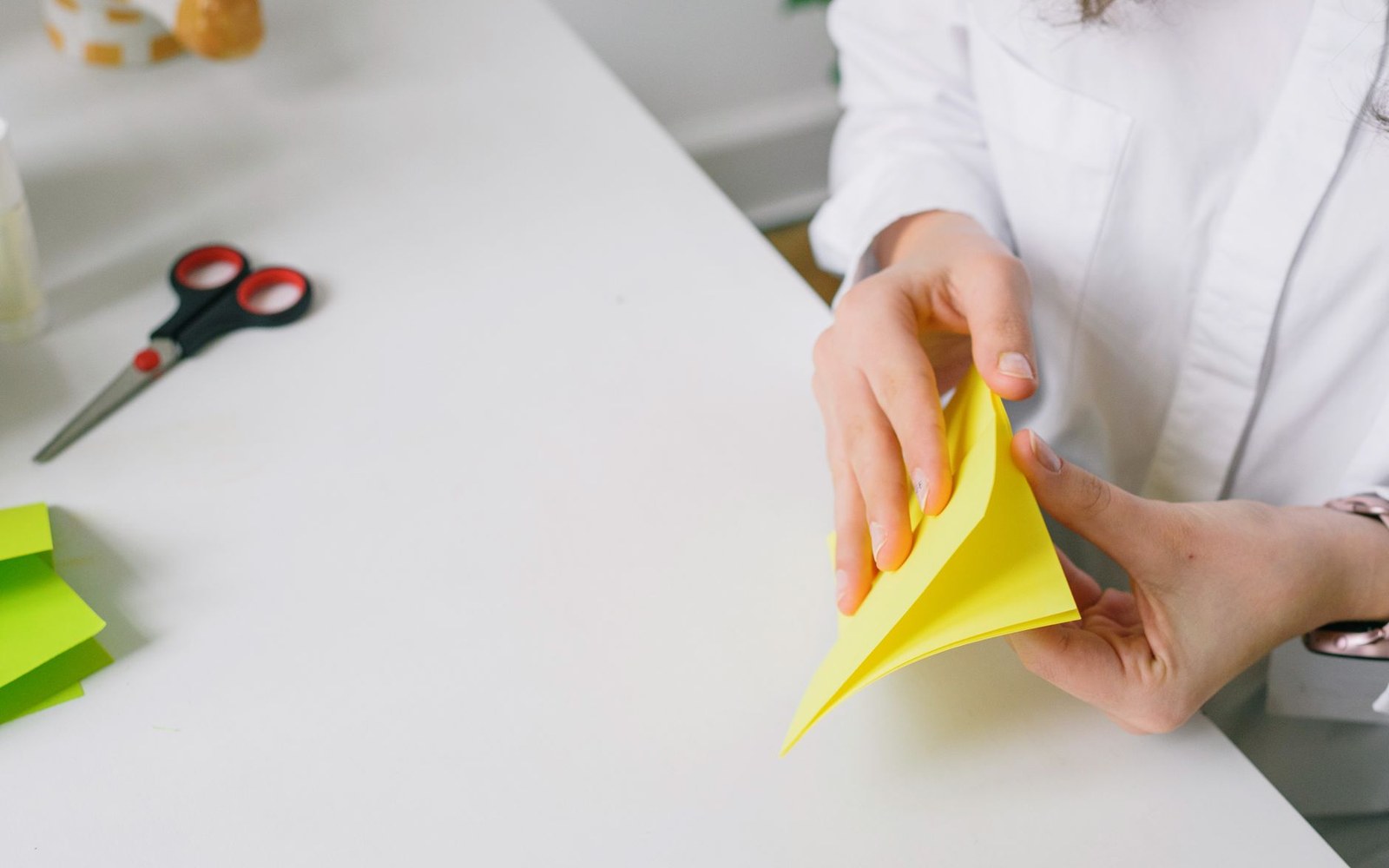
A few refinements make the difference between a booklet that holds and one that eventually fans apart. Folding all pages with a bone folder before assembly reduces the springback that fights the staple. Jogging the pages evenly before stapling prevents the inner pages from creeping forward past the cover — a phenomenon called creep that can leave interior pages protruding beyond the trim edge. Some makers trim after binding, running the finished booklet through a guillotine or against a steel rule to give all four edges a clean, consistent line. None of this requires equipment beyond what most people already own or can borrow. That accessibility is the point: saddle stitch survives because it asks almost nothing of the maker, and gives back a proper book.