Storing Paper That Was Never Meant to Last
The enemies are simple, even if they're everywhere
Photocopied on whatever was cheap, stapled with whatever was on the desk — zines are fragile objects that nobody designed for permanence. A little forethought keeps them readable for decades.
Paper degrades through four main agents: light, moisture, acid and metal. Zines, made quickly from non-archival stock, tend to be vulnerable on all four counts simultaneously. The newsprint or economy copy paper used in most zines is high in lignin — the structural polymer in wood pulp — which oxidises and turns brittle and yellow far faster than acid-free archival stock. The photocopier toner fused to that paper is relatively stable, but it rides on a substrate that isn't.
Light, particularly ultraviolet, accelerates lignin breakdown and fades any colour printing. Even indirect sunlight through a window is damaging over years. Fluorescent tubes emit low levels of UV and will slowly do the same work. Moisture encourages mould and causes paper to cockle; keeping relative humidity below about 50 percent and reasonably stable is more important than hitting a precise number. Fluctuation — the box that gets damp in summer and dry in winter — does more harm than a slightly elevated but consistent reading.
Then there's metal. The humble staple that holds a saddle-stitched zine together is almost always made from steel, and steel rusts. That rust migrates outward into the paper, leaving brown stains that eventually eat through the fibres around the binding. If a zine is worth keeping, its staples are worth replacing — or at minimum removing — before you box it.
Boxes, folders and what goes inside them
The standard archival approach is straightforward: acid-free boxes, acid-free folders or sleeves, kept upright or flat depending on size and fragility. Clamshell boxes — rigid, lined, closing over themselves — are the library and archive standard, but they are expensive if you are housing a large personal collection. A reasonable alternative is a sturdy acid-free drop-front box, with individual zines inside unbuffered polyester sleeves or acid-free paper folders. The folder serves two functions: it slows moisture and dust transfer, and it keeps smaller zines from sliding under larger ones and getting creased.
Half-letter zines — a folded letter sheet, the defining format — can be stored flat in letter-size folders without any trimming or refolding. Thicker, multi-section issues are better kept upright, spine down, like paperback books, with enough companions in the box that they don't lean and deform. Anything stored upright needs to be supported; a wobbling stack of zines will develop curved covers and stressed folds inside a year.
One practical consideration often overlooked: do not pack boxes completely full. A crammed box makes retrieval difficult and risks tearing covers every time you reach in. Leave roughly a hand's width of space. Label the box on both the spine and the top — when boxes are stacked, the top label is the one you'll actually see.
The staple question, in practice
Boxes, light, staples and rust.
Collecting & Archiving
Removing original staples is a judgment call. For a zine with obvious long-term value — historical, personal, cultural — the case for removal is strong. Use a proper staple remover or a thin, flat tool rather than your fingernail; the goal is to lift the clinched ends from the back cover and slide the staple free without tearing. Replace it with a stainless steel or brass staple if you want to re-bind, or tie the signatures loosely with cotton twill tape and leave the original holes as evidence. Some conservators prefer to leave badly rusted staples in place and interleave acid-free tissue to slow migration, rather than risk tearing brittle paper during removal — if a zine is already fragile, intervention can cause the very damage it's meant to prevent.
For a personal collection of recent zines with no immediate conservation urgency, replacing staples as you acquire each item takes five minutes and solves the problem at the source. Stainless steel staples are available from archival suppliers; they are not exotic.
Temperature, light and the rest
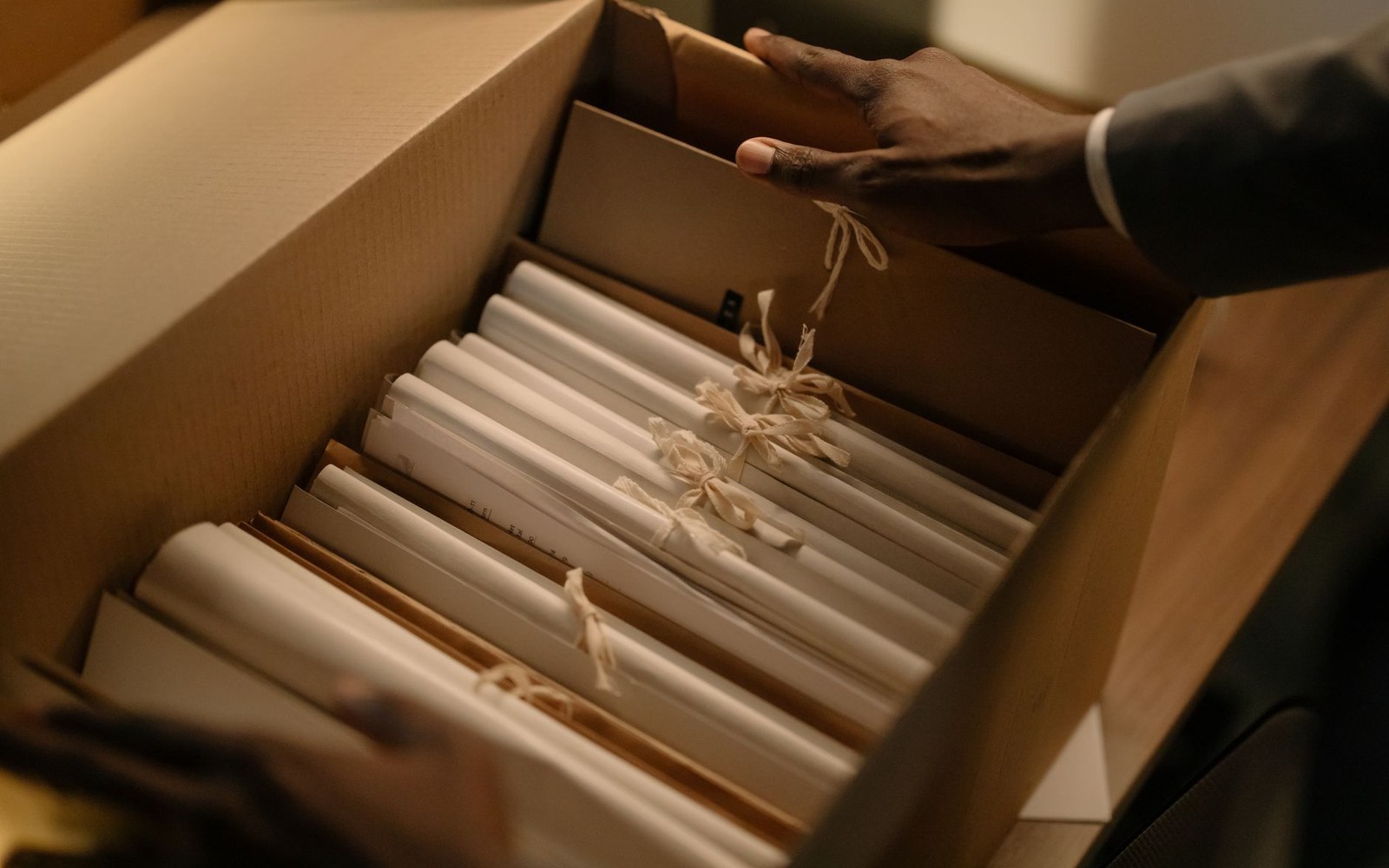
Cool, dark and dry is the short version of archival storage — and cool matters less than dark and dry. A climate-controlled room is ideal, but a consistently cool interior room with no direct light and stable humidity is far more achievable and will do most of the work. Avoid external walls in climates with cold winters; avoid attics and basements as primary storage.
Zines were printed fast, handed out freely, and expected to be read to pieces. The ones that survive intact tend to survive by accident. Storing them deliberately — in acid-free materials, away from metal and light — is a small act of translation: moving something made for now into the hands of someone reading it later.