Trades, Tables and Fair Etiquette
The unwritten rules of the folding table, written down gently.
The culture before the commerce
Zine fairs run on a social contract that nobody prints and nobody enforces, yet almost everyone honours. It predates the modern fair circuit by decades — the same informal code governed distro catalogues and convention swap tables long before anyone called it a scene. Understanding it helps whether you are tabling for the first time, browsing as a reader, or running a room.
The foundational assumption is that makers are peers, not competitors. You might be sitting two feet from someone whose work covers the same subject as yours. That proximity is the point. Conversation, exchange and occasional collaboration are what fairs produce alongside sales, and the etiquette exists to protect those things.
At the table
The unwritten rules of the folding table, written down gently.
Distros & Fairs
Arrive when you said you would and set up quietly. Other makers are doing the same thing in the same narrow window, and a slow setup that spills into a neighbour's space creates friction before the doors open. Bring your own float — coins and small notes — because the fair organiser is not a bank, and your first buyer of the day should not pay the price of your unpreparedness.
Price your work visibly. Readers should not have to ask; asking feels like a negotiation, and many people will simply move on rather than initiate one. A small folded card or a handwritten sheet taped to the table costs nothing and removes an unnecessary barrier.
The trade is one of the most reliable pleasures of a fair. When you genuinely admire another maker's work, offer a copy of yours in exchange. Do it simply and without pressure: "I'd swap one of mine if you'd like." They can say no. Most will say yes, and both tables end the day richer. Do not trade purely to reduce your carry-home weight; the other person knows the difference.
Leave your neighbour's table alone when they step away. Watch it if they ask, direct buyers their way, and absolutely do not let your display drift into their footprint. The half-metre between two tables is shared territory; treat it accordingly.
With readers
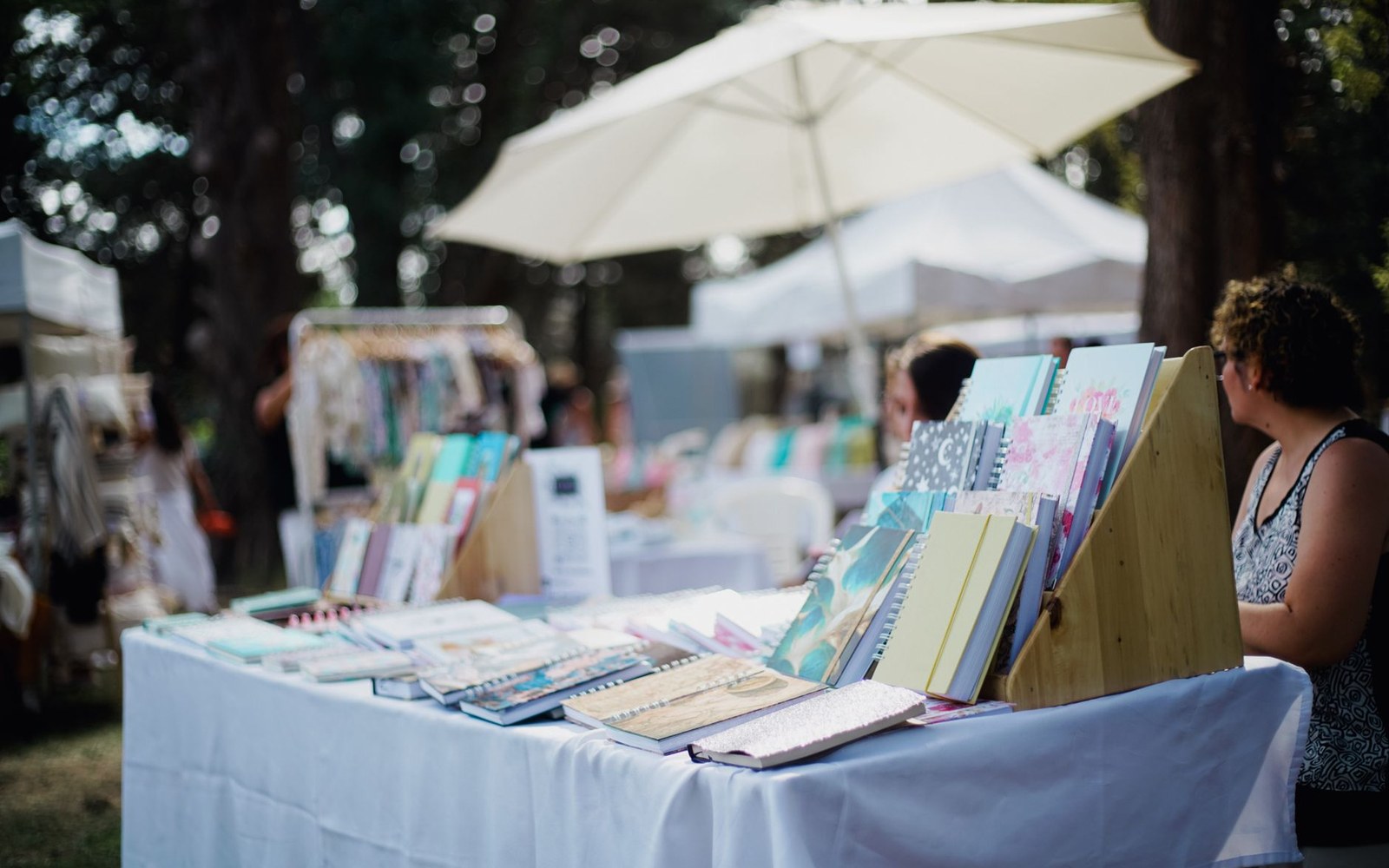
Readers are not obliged to buy. A fair is also just a place to look, to handle things, to talk to people whose work you have read. Hovering over someone who is browsing your table makes them uncomfortable and is counterproductive. Be present, be available, and let the work do the first introduction.
If someone picks up a zine and reads it at your table, let them. That is the best possible advertisement. If they put it down and walk away, that is fine too. The saddle-stitched, hand-numbered thing on your table is not a luxury good with a hard sell; it is an invitation.
Have a brief, honest answer ready for "what is it about?" — not a pitch, just a description. Makers sometimes find this harder than making the zine itself, but a reader who understands what they are holding is more likely to take it home.
Trades between distros
If a distro representative approaches your table, they may be interested in stocking your work. The standard arrangement is consignment — they take copies and pay after selling — though some distros offer a small outright payment. Either way, ask what their terms are before you hand anything over, and settle on a number of copies. A handshake deal is fine; a quick note confirming the count and the split is better. Distros operate on goodwill and thin margins, so both sides keeping clear records is a courtesy, not an insult.
Leaving
Pack down on time. Straggling past the close inconveniences the room, the organisers and the makers who need to catch trains. Leave your space as you found it. If you have surplus copies, offer them to the organiser for a library pile or a swap box before you pack them — many fairs keep one, and it costs you nothing.
The best thing you can carry home from a fair is not money but a bag of other people's work and a few conversations that go somewhere. The etiquette is simply what makes that possible for everyone in the room.