The Half-Letter Fold Explained
One sheet, one fold, and the format that defines the form
Take a single sheet of letter paper — 8.5 by 11 inches — and fold it once along the short axis. You now hold something 8.5 by 5.5 inches: half-letter. Four sides, two leaves, ready to be filled, stapled and handed to someone. This is the zine's native shape, the format that most people picture when someone says the word, and for good reason: it demands the least from its maker and gives back the most.
Why this format, and why it stuck
There is no committee that chose it. The half-letter format won by accumulation — by the convergence of available paper, available machines and the logic of copying. A letter sheet runs through a photocopier without complaint. Fold it once and the proportions are compact and easy to handle, wide enough for drawings and columns of text, small enough to slip into a jacket pocket or a padded envelope. When early self-publishers were working from kitchen tables with borrowed copier time, the half-letter page was simply the thing in front of them. Economy drove everything.
The mechanics of that economy are worth spelling out. A single letter sheet, printed on both sides, gives you four distinct page surfaces after the fold. A maker working with eight sheets — a common, manageable amount — produces a thirty-two-page booklet. Sixteen sheets yield sixty-four pages, still saddle-stitched through the spine with a long-arm stapler, still copiable in a run of thirty or fifty without hiring a printer. No other format delivers that page count per sheet with such simplicity, and simplicity is the whole project.
The format also suited mimeograph before it suited photocopiers. Mimeograph drums accepted standard-size stencils; their output was letter-sized; the fold was implicit. When photocopiers replaced mimeographs through the 1970s and 1980s, the half-letter proportion carried across unchanged. The machine changed; the sheet did not.
Anatomy and layout logic
One sheet, one fold, and the format that defines the form.
Formats & Binding
A half-letter zine is assembled flat before it is folded. The maker lays out pages in pairs across the letter sheet — two pages per side, four per sheet — and the order in which those pairs fall determines what the reader encounters when they open the finished booklet. This sequencing is called imposition, and getting it right by hand requires thinking backwards and forwards at the same time: page one and the back cover share one side of the outermost sheet; pages two and three, the innermost spread of that same sheet, face each other in the middle of the booklet. Work it out wrong and your zine opens onto your back cover.
Most makers solve this either by sketching a thumbnail dummy — a rough folded mockup where they number the pages before laying out the real thing — or by printing a test copy and walking through it before committing to the full run. Neither approach is complicated, and the error, when it happens, is immediately obvious, which is its own kind of pedagogy.
Layout within the half-letter format rewards simplicity. The page is roughly 5.5 by 8.5 inches per leaf, which is generous for a personal zine or a tightly set column of text but unforgiving for busy designs with many competing elements. Margins matter: the gutter — the inner edge, near the staple — needs breathing room because the fold and the staple together eat a small slice of the visual field. A generous gutter, somewhere between a half-inch and three-quarters, prevents text or images from disappearing into the bind. The outer margins can be tighter, but a consistent frame across all pages gives the finished object a coherence that reads as intentional even when the content is deliberately raw.
Image reproduction in this format tracks the logic of the copier. High-contrast black-and-white line art holds well; photographs require halftone conversion or a heavy-contrast edit to survive toner at small scale. Risograph printing opens the door to spot colour — a second drum, a second pass — without complicating the format itself. The sheet stays the same; only the ink changes.
The format in the hand
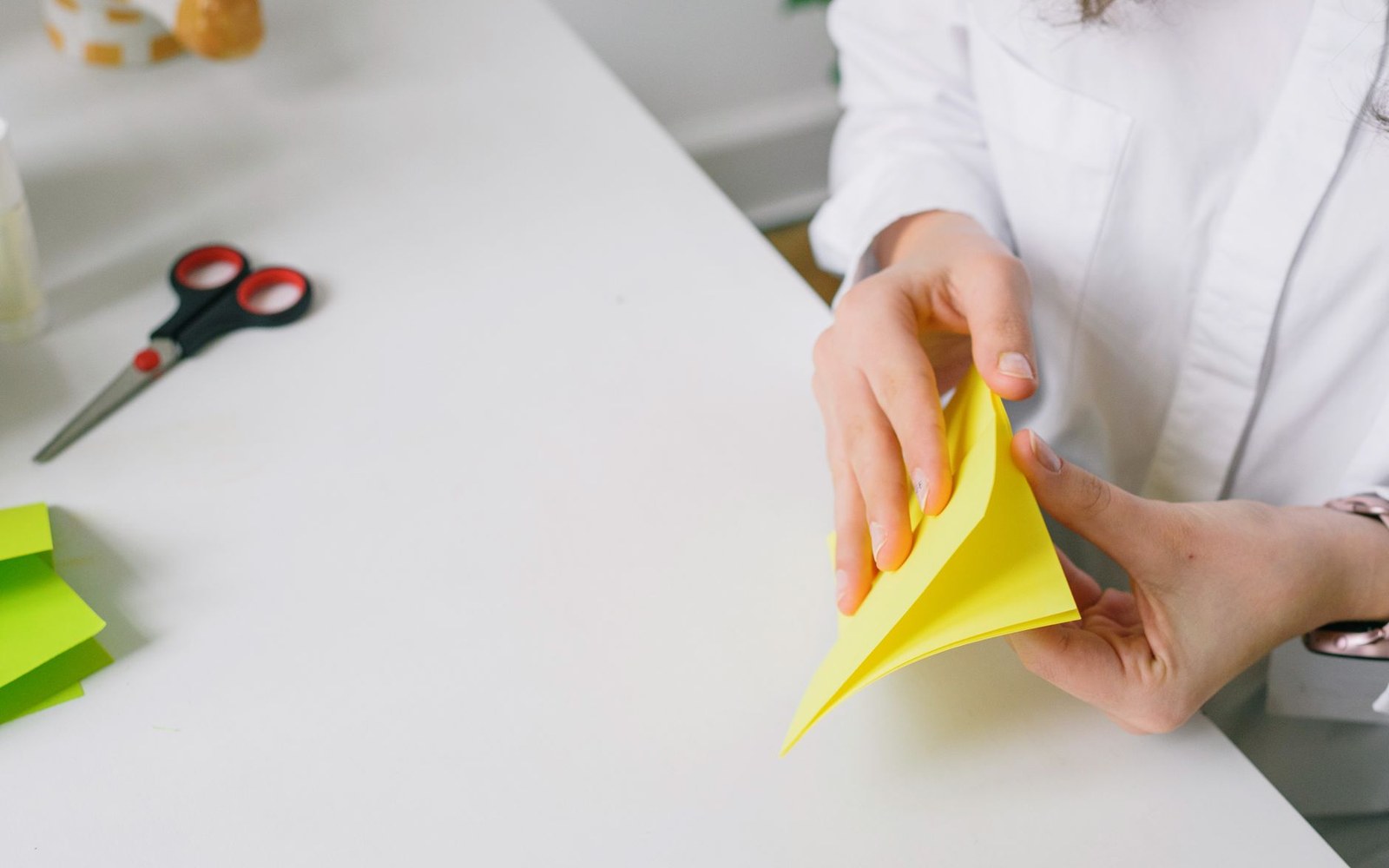
A well-made half-letter zine has a specific physical quality that is hard to describe until you have held one. It is light but not flimsy — paper weight matters here, and a heavier stock, say 24-pound bond rather than standard 20-pound, makes the object feel more deliberate without adding meaningful cost to a short run. The cover, if the maker uses a separate cover sheet in a different weight or colour, gives the whole thing a front and back that read as intentional boundaries. The staples at the spine should be flush — not biting too deep into the pages, not sitting so loose they catch on things.
The format has a tactile intimacy that larger formats lack. A digest-size publication (a format long familiar from literary magazines) feels more formal; an A5 sheet, the European near-equivalent of the half-letter, is fractionally taller and slightly more considered-seeming. Half-letter is the format where the maker's hand is most visible — slightly uneven folds, the small impressions of a staple gun, the occasional page that sits a millimetre off. These are not flaws. They are part of the information the object carries: someone made this, by hand, for you.
Variations and the limits of one fold
The half-letter is not the only option, and working makers know the alternatives. An eighth-fold — letter paper folded three times — produces a small eight-page mini-zine from a single uncut sheet, no staples required. A quarter-fold is smaller and squarer than half-letter and prints as a single-sheet booklet. Accordion folds, french folds, and digest formats each have their occasions. But half-letter is the format that connects most naturally to the distro table, the envelope swap and the library collection because it is the most legible as a publication: it has a cover, a spine, an inside, and a back.
For librarians and archivists, the half-letter format presents its own practical notes. Shelving is straightforward — the booklet stands at a consistent height — but the colophon, where it exists, is usually on the back cover or the inside back cover, not on a title page. Call numbers, when assigned, typically go on the back cover or on a spine label applied with care given how narrow the spine is on a thin issue. Box storage is common for collections of many issues, since a half-letter zine will not survive upright shelving without support unless the issue count is high enough to give it rigidity.
One fold. One sheet. The format is so reduced that everything depends on what goes inside it — which is, of course, exactly the point.